

Over the last six months, RPC’s shares have sunk to $6.12, producing a disappointing 6.4% loss - a stark contrast to the S&P 500’s 14.2% gain. This might have investors contemplating their next move.
Is now the time to buy RPC, or should you be careful about including it in your portfolio? See what our analysts have to say in our full research report, it’s free.
Why Is RPC Not Exciting?
Even though the stock has become cheaper, we’re sitting this one out for now. Here are three reasons we avoid RES, plus one stock we’d rather own.
1. Low Gross Margin Reveals Weak Structural Profitability
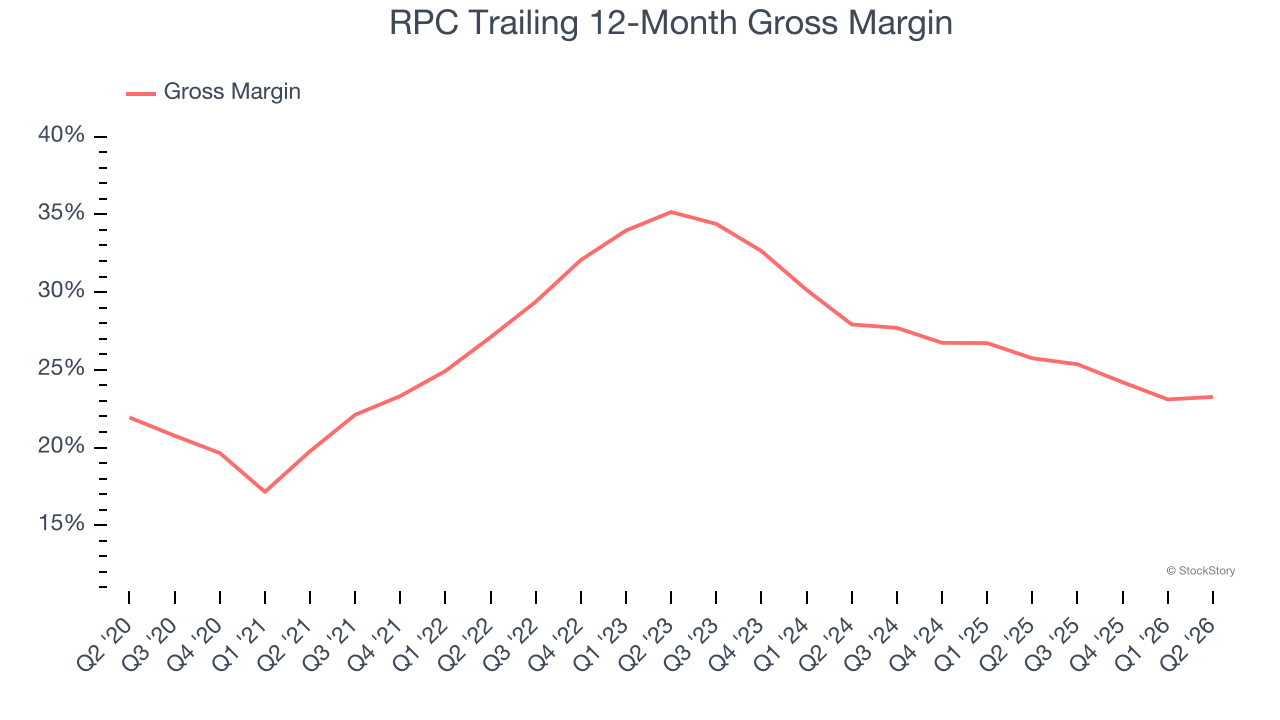
In any given year, energy gross margins are heavily influenced by prices, hedging, and cost inflation, but over a full cycle these gross margins reveal which producers are structurally advantaged through superior “rock” quality, infrastructure access, and cost position.
RPC, which averaged 28% gross margin over the last five years, exhibited bottom-tier unit economics in the sector. It means the company will struggle at higher commodity prices than peers with better gross margins.
2. Shrinking EBITDA Margin
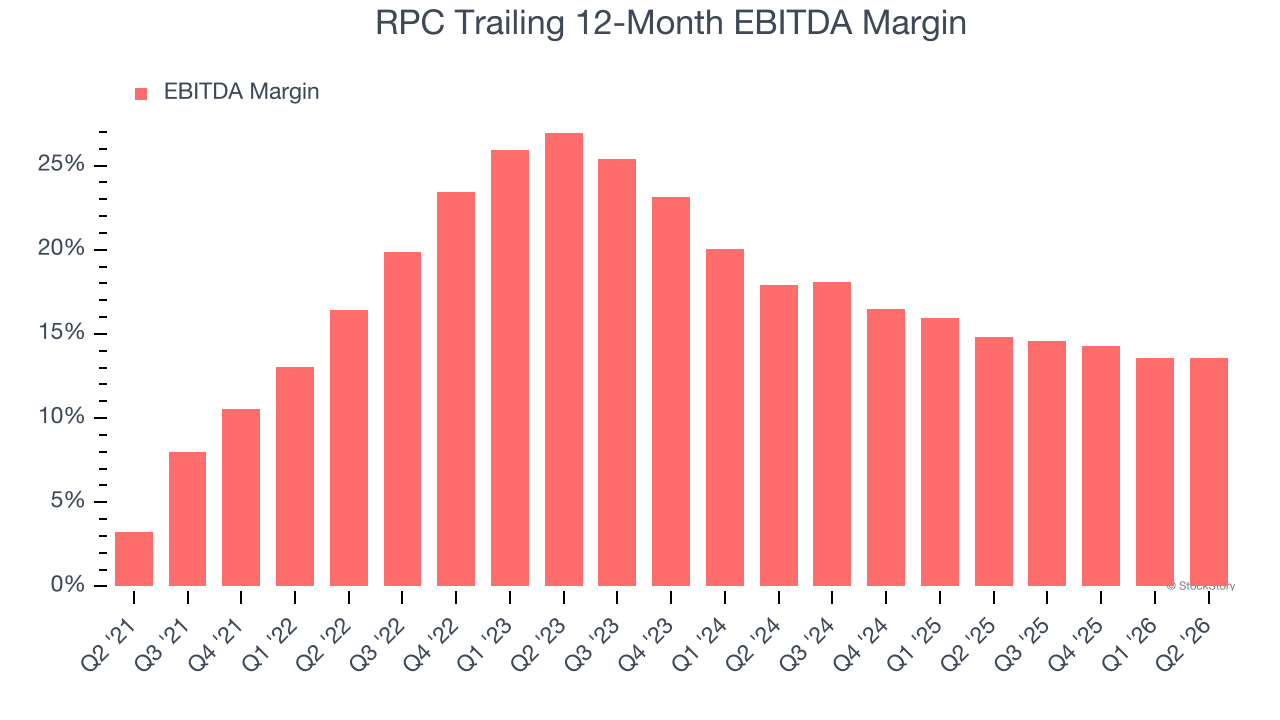
Adjusted EBITDA margin strips out accounting distortions tied to depletion and historical drilling spend, providing a clearer view of the cash-generating power of the underlying asset base before financing and reinvestment decisions.
Looking at the trend in its profitability, RPC’s EBITDA margin decreased by 2.9 percentage points over the last year. This raises questions about the company’s expense base because its revenue growth should have given it leverage on its fixed costs, resulting in better economies of scale and profitability. RPC’s performance was poor no matter how you look at it - it shows that costs were rising and it couldn’t pass them onto its customers. Its EBITDA margin for the trailing 12 months was 13.6%.
3. Mediocre Free Cash Flow Margin Limits Reinvestment Potential
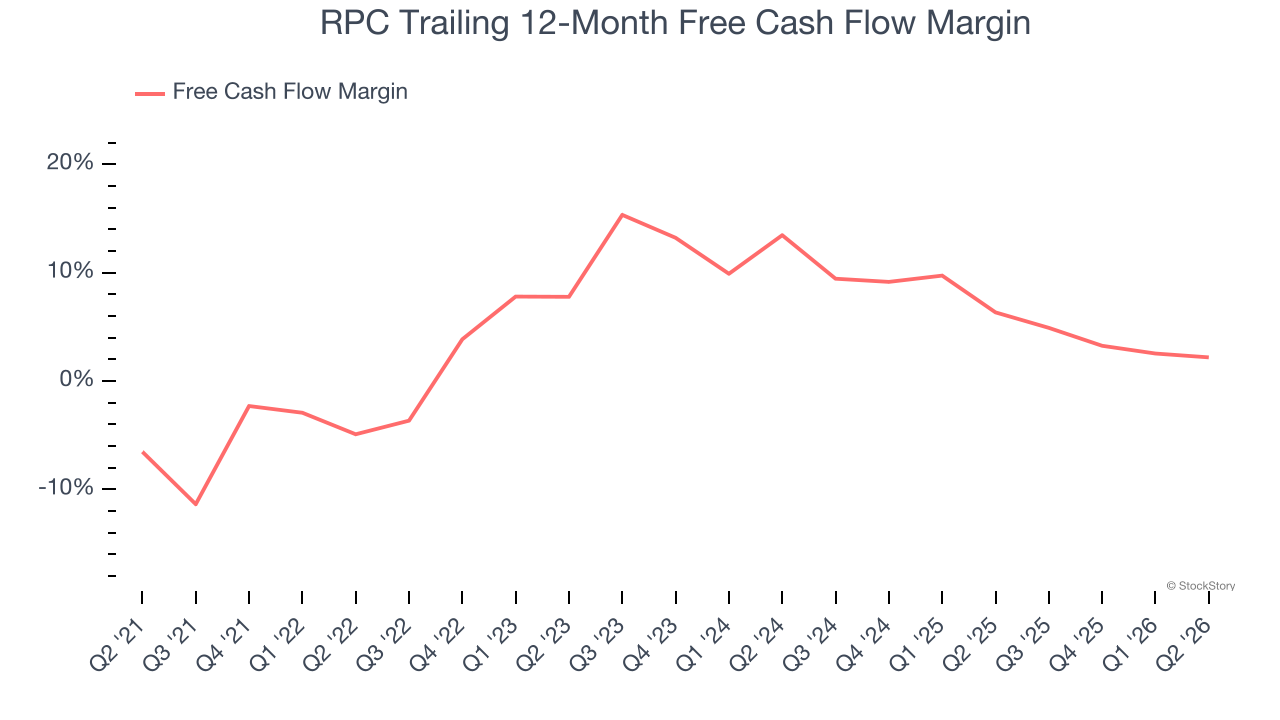
Free cash flow isn’t a prominently featured metric in company financials and earnings releases, but we think it’s telling because it accounts for all operating and capital expenses, making it tough to manipulate. Cash is king.
RPC has shown mediocre cash profitability relative to peers over the last five years, giving the company fewer opportunities to return capital to shareholders. Its free cash flow margin averaged 5.4%, below what we’d expect for an upstream and integrated energy business.
Final Judgment
RPC’s business quality ultimately falls short of our standards. Following the recent decline, the stock trades at 22× forward P/E (or $6.12 per share). Investors with a higher risk tolerance might like the company, but we think the potential downside is too great. We’re pretty confident there are more exciting stocks to buy at the moment. Let us point you toward a fast-growing restaurant franchise with an A+ ranch dressing sauce.
Stocks We Would Buy Instead of RPC
ALSO WORTH WATCHING: Top 5 Momentum Stocks. The best time to own a great stock is when the market is finally noticing it. These aren’t just high-quality businesses. Something is happening with them right now. Elite fundamentals meet near-term momentum — both boxes checked at the same time.
Find out which stocks our AI platform is flagging this week. See this week’s Strong Momentum stocks — FREE. Get Our Strong Momentum Stocks for Free HERE.
Stocks that have made our list include now familiar names such as Nvidia (+1,460% between June 2020 and June 2025) as well as under-the-radar businesses like the once-micro-cap company Kadant (+214% between June 2020 and June 2025). Find your next big winner with StockStory today.